Parcel delivery fee SMS scams: how they work and how to spot them
Updated · 6 min read · by the FraudScan team
“Your parcel could not be delivered. Please pay the 1.99 € redelivery fee within 24 hours.” Messages like this are among the most common scams sent by SMS, WhatsApp and email. They work because almost everyone is expecting a delivery at some point, and the amount asked for is so small that it doesn't feel risky.
The fee is not the goal. The real target is the card details, one-time codes or login you type into the fake page — which are then used for much larger payments.
How the scam works
- The message: a text or email claims a parcel is on hold because of an unpaid fee, a missing address or failed delivery, usually with a deadline.
- The link: it leads to a page that copies a well-known courier or postal service, often with a tracking number and a progress bar to look real.
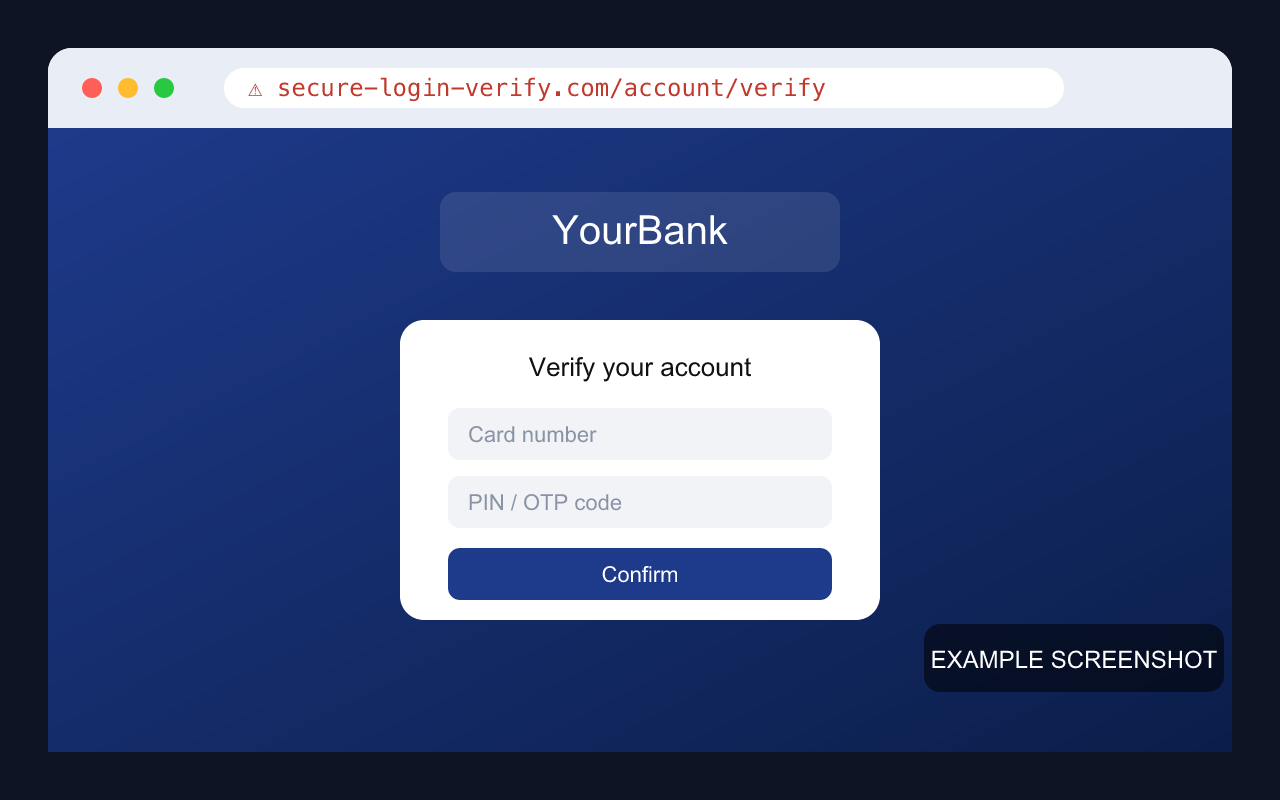
- The “small payment”: you are asked for your name, address and card details to pay a fee of one or two euros or dollars.
- The code: a one-time code then arrives from your bank. The fake page asks you to enter it — but it is actually approving a much larger payment or adding your card to the scammer's phone wallet.
- The follow-up: days later, a fake “bank security team” may call about suspicious activity and try to talk you into moving money to a “safe account”.
Red flags in the message
- You weren't expecting a parcel from that company, or the message doesn't name what was ordered.
- The link domain isn't the courier's official site — look for extra words like -delivery, -redelivery, -track, -help or unusual endings.
- A short deadline (“within 24 hours” or “today”) and a threat that the parcel will be returned or destroyed.
- The sender is a normal mobile number or an email address unrelated to the courier.
- Generic greeting (“Dear customer”), odd spelling or wording, and a request to pay by card for something you'd normally never pay for.
Red flags on the payment page
- The page asks for full card details, including the CVV, for a tiny fee.
- It asks you to type in a one-time code sent by your bank. Read the bank's message: it often shows a different amount or merchant.
- The address bar shows a domain you don't recognise, even though the page looks exactly like the courier's site.
How to check a delivery safely
Never use the link in the message. Open the courier's official app, or type their web address yourself, and enter the tracking number from your original order confirmation. If there really is a fee, it will be shown there. You can also contact the shop you ordered from — they know which courier was used.
If you're unsure, paste the entire message into FraudScan's AI scam checker. It extracts the link, checks the domain against reported scams and scans it for warning signs such as card and one-time-code forms.
What to do if you already paid
- Call your bank now using the number on your card or in your banking app, and block the card. Mention that you entered details on a phishing page.
- Don't trust follow-up calls: your bank will never ask you to move money to a “safe account” or to read out codes.
- Check your phone wallet and banking app for cards or devices you didn't add.
- Report it: forward the text to your mobile operator's spam number where available, and report the website on FraudScan so other people are warned.
Check it in seconds
Paste the suspicious message, link or screenshot. We compare it with reported scams and scan the website for you, free.
Frequently asked questions
Do real couriers send SMS about delivery fees?
Couriers do send delivery updates, and some customs charges are real. But a genuine fee can always be checked in the courier's official app or website using your own tracking number. Never pay through a link in an unexpected message.
I only clicked the link — am I at risk?
Opening the page is usually low risk if you didn't enter anything. Close it, don't enter details, and delete the message. If you entered card details, passwords or codes, contact your bank straight away.
Why do they only ask for 1 or 2 euros?
A small amount lowers your guard. The aim is to capture your full card details and one-time codes, which are then used for larger payments or to add your card to the scammer's phone.